 How To
How to Play Pickleball: A Beginner’s Guide
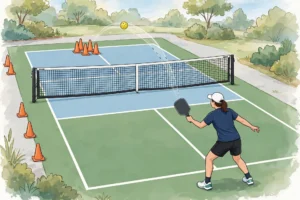
So you want to know how do you play pickleball. Short answer: it’s a paddle sport played on a small court, somewhere between tennis, badminton, and ping pong, and you can learn the basics in about fifteen minutes. The scoring takes a little longer to click. Give it one real game and it’ll make sense.
This guide walks you through everything you need for your first time on court: what you need to bring, how the court is laid out, how a point actually starts and ends, and the handful of mistakes that give away a first-timer. By the end, you’ll know enough to walk onto any public court and hold your own in a casual game.
What You Need to Get Started
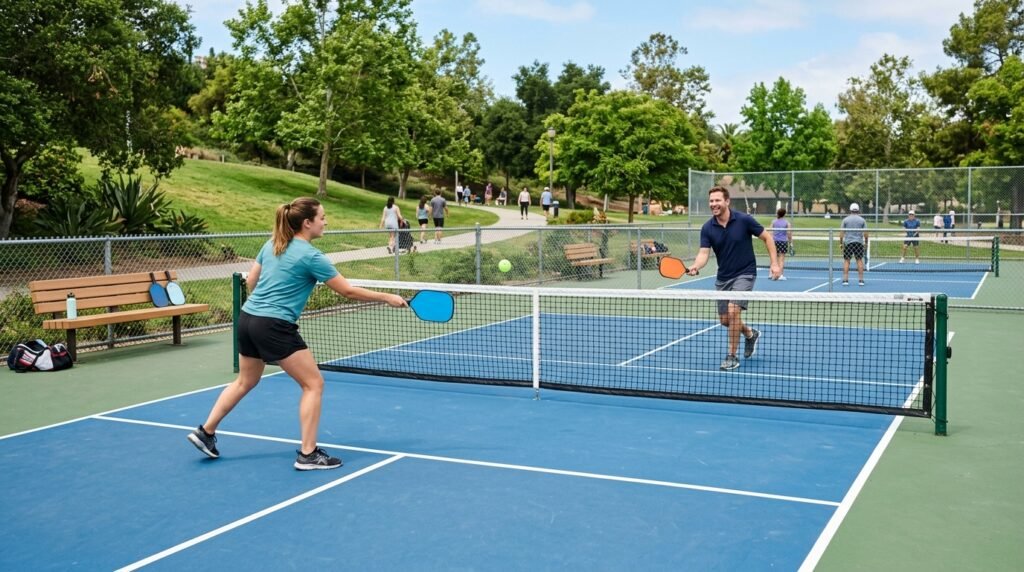
You need three things: a paddle, a ball, and a court. That’s genuinely it.
Most beginners spend way too much time researching paddles before they’ve hit a single ball. Don’t do that. Borrow one, rent one, or grab the cheapest option at a sporting goods store for your first few sessions. You won’t know what you actually like in a paddle (weight, grip size, how much pop you want) until you’ve played a handful of times. Once you’re hooked, and you probably will be.
The ball is a lightweight plastic ball with holes in it, similar to a wiffle ball. Outdoor and indoor balls are different (outdoor ones are a bit heavier and have smaller holes to handle wind), so grab the right type for where you’re playing.
As for the court, plenty of cities have public pickleball courts, and many tennis and basketball courts get temporary lines taped down for pickleball too. More on finding one near you later in this guide.
The Court Basics
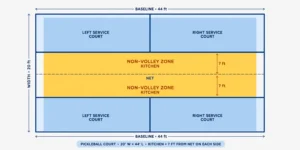
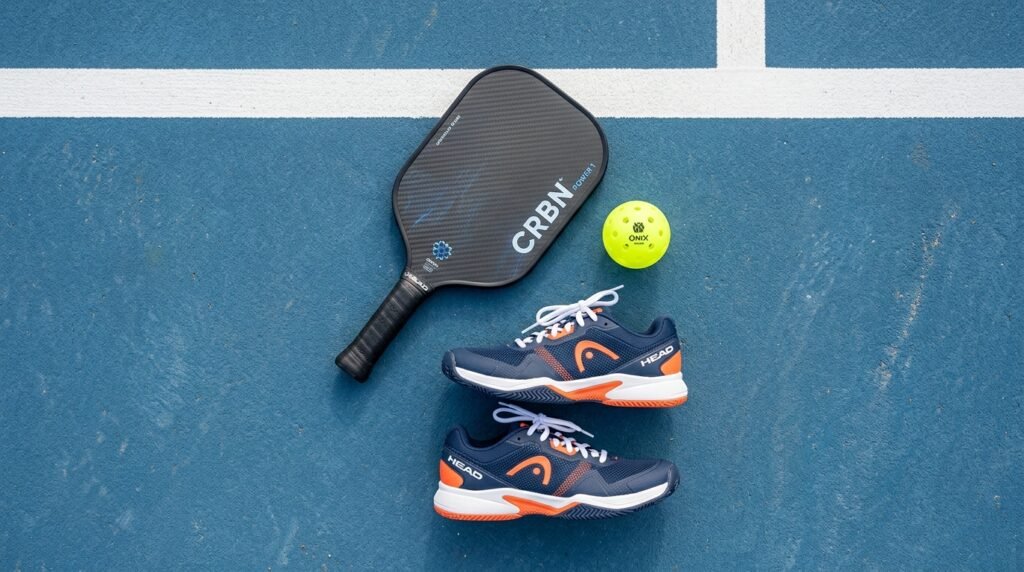
A pickleball court is 20 feet wide and 44 feet long, the same footprint as a doubles badminton court. That’s small. For comparison, a full tennis court is more than twice the length. This is part of why the game feels so approachable early on: less ground to cover, shorter rallies to chase down.
The net sits at 36 inches high at the posts and dips slightly to 34 inches in the middle. Lower than a tennis net, which matters once you start hitting shots that clear it by inches instead of feet.
The one court feature every beginner needs to know before their first point: the kitchen. Officially called the non-volley zone, it’s a 7-foot strip on each side of the net where you’re not allowed to hit the ball out of the air (a volley). You have to let it bounce first if you’re standing in that zone. It sounds like a small detail, but it shapes almost every strategic decision in the game. We’ve got a full breakdown in What Is the Kitchen? if you want the deeper explanation, but for now just know: don’t smash volleys while standing in that zone near the net.
For exact court dimensions and the full technical rulebook, USA Pickleball publishes the official rules at usapickleball.org.
How a Game Starts: Serving
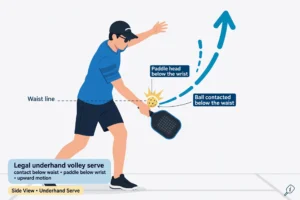
Every point begins with a serve, hit underhand, below your waist, diagonally across the court into the opponent’s service box. No overhead serves like tennis. The paddle has to be moving in an upward arc when it makes contact with the ball.
Serving trips people up more than it should, mostly because the rule about paddle angle and contact point sounds more complicated in writing than it is in practice. Once you’ve served a few times, your arm figures it out faster than your brain does. We cover the full mechanics, foot faults, and common serve errors in How to Serve in Pickleball article.
Scoring Explained Simply
Here’s where most beginners actually get stuck, more than the rules of the court or the serve. So let’s slow down.
Games are played to 11 points, and you have to win by at least 2. Only the serving team can score a point. That’s the part that trips people up: if you’re returning serve and you win the rally, you don’t get a point, you just get the serve. This is called side-out scoring, and it’s different from tennis, where either side can score at any time.
Let’s walk through one full point so it clicks.
Team A is serving. The score is called out as three numbers in doubles: the serving team’s score, the receiving team’s score, and which player on the serving team is serving (1 or 2). So “4-2-1” means Team A has 4 points, Team B has 2, and it’s the first server on Team A’s turn.
Team A serves, Team B returns it, and the rally goes back and forth until someone makes an error or hits a winner. If Team A wins the rally, they score a point, the score becomes 5-2-1, and the same player serves again from the other side of the court. If Team B wins the rally instead, no point is scored. Team A just loses their serve, and it becomes Team B’s turn to serve.
In doubles, both players on a team typically get a chance to serve before the serve passes to the other team, except at the very start of the game, where the first serving team only gets one server before the serve switches over. That one exception confuses almost everyone the first time they hear it, so don’t worry if you have to ask someone to repeat it courtside. Everyone does.
The Two-Bounce Rule
After the serve, the ball has to bounce once on the receiving side before they hit it back, and then it has to bounce once more on the serving side before that team hits it. After those two bounces, players can choose to volley the ball out of the air (as long as they’re not standing in the kitchen) or let it bounce again.
Why does this rule exist? It slows the game down right after the serve so nobody can just rush the net and slam an easy volley before the other team has a fair chance to get set up. It’s one of the things that makes pickleball feel more like a game of patience and placement than raw power, at least early in the point.
Singles vs Doubles
Most beginners start with doubles, and honestly, most casual players stick with doubles for good. It’s easier on your legs since you’re covering half the court, it’s more social, and it’s what you’ll find at almost every public open-play session.
Singles is a different pace entirely: full court coverage, longer rallies, more running, and different scoring quirks (no third number needed since there’s only one server per side). If singles interests you, we’ve laid out the full rules and strategy differences in Singles Rules article.
For your first few sessions, just show up to a doubles open play. It’s the easiest way to actually learn the flow of the game.
Is Pickleball Actually Easy to Learn?
Yes and no, and it’s worth being honest about that instead of just telling you it’s easy.
Casual pickleball is genuinely one of the easiest paddle sports to pick up. Most people can rally, understand the basic rules, and enjoy a game within their first fifteen or twenty minutes on court. The learning curve for “I can play and have fun” is short.
Is pickleball hard once you want to get actually good at it? Yes, more than people expect. Controlling soft shots near the kitchen, reading your opponent’s positioning, developing a consistent serve under pressure, that stuff takes real reps. The gap between “casual player having fun” and “player who can compete at a 4.0 level” is bigger than the sport’s easygoing reputation lets on. If you want a sense of where you currently stand or what to aim for, our Pickleball Skill Levels article explains the rating system players use to track progress.
Common First-Time Mistakes to Avoid
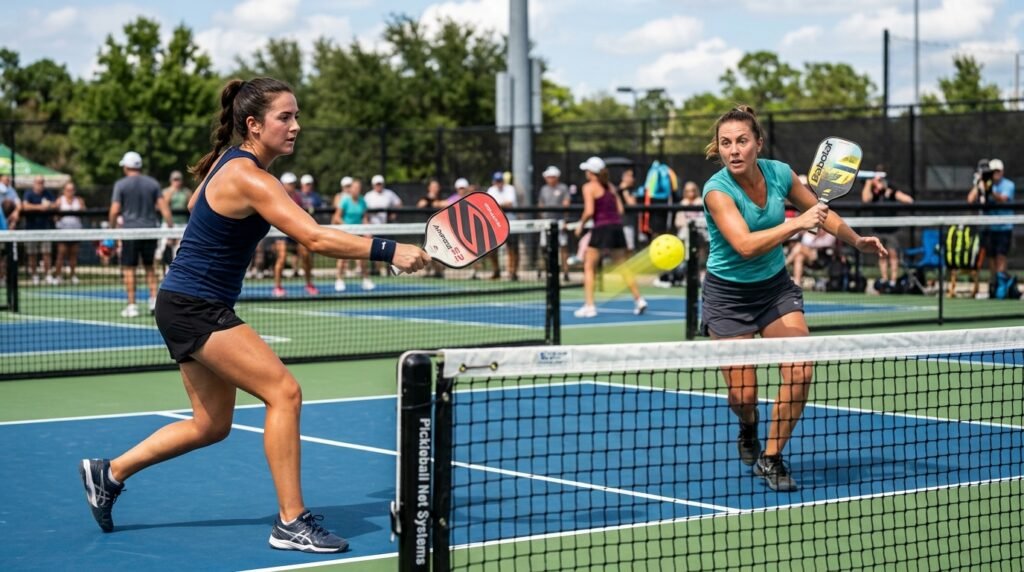
A few habits give away a first-time player almost instantly:
Standing right up against the net too early in a rally. It feels aggressive, but it leaves you exposed to a fast shot right at your body before you’ve earned that position through a soft shot exchange.
Forgetting the two-bounce rule and trying to volley a serve return straight out of the air. It happens to everyone once. You’ll get a friendly reminder from whoever you’re playing with.
Serving overhand out of habit from tennis. The underhand, below-the-waist motion feels foreign at first if you’ve played other racket sports, but it becomes automatic fast.
None of these are a big deal. Everyone makes them in their first few games, and nobody at a public court is going to hold it against you.
Where to Actually Go Play
Reading about pickleball only gets you so far. At some point you need to find a court, show up, and play a few genuinely awkward first points until it clicks.
Most areas have public courts, community rec center sessions, or dedicated pickleball facilities with open play hours. Use our Court Directory to find courts near you, complete with hours and what to expect at each one.
You’ve got the basics down. The Ultimate Pickleball Playbook is where you go from beginner to genuinely dangerous on court.
FAQ
Is pickleball easy to learn?
For casual play, yes. Most people can rally and understand the core rules within their first session. Getting competitively good takes ongoing practice, especially around soft shots near the kitchen and consistent serving.
Is pickleball hard?
Not to start, but it has more depth than it looks like from the sidelines. The physical side is approachable for most fitness levels, but the strategy and shot control needed to win consistently against skilled players take real time to develop.
How do you start playing pickleball?
Grab a paddle and a ball (borrowed or cheap ones are fine to start), find a local court through a court directory or community rec center, and join a doubles open play session. You’ll pick up the flow fastest by actually playing rather than studying the rules first.
How do you learn pickleball fastest?
Play regularly, even if it’s casual open play twice a week. Watching a few short instructional videos on serving and kitchen positioning helps, but nothing replaces actual reps on court against different opponents.
How do you play pickleball if you’ve never held a paddle before?
Start with the basics: an underhand serve, letting the ball bounce once on each side before volleying (the two-bounce rule), and staying out of the kitchen when hitting the ball out of the air. Everything else you’ll pick up through play.