 Rules
Rules
Pickleball Skill Levels Explained: The Full 2.0-5.0 Rating Guide
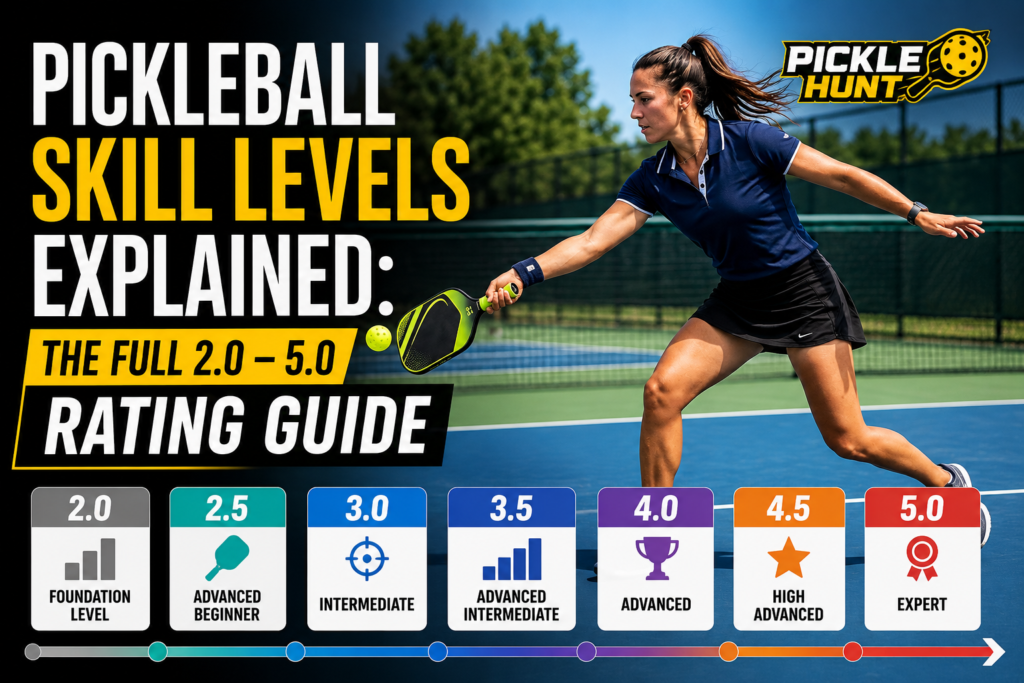
Pickleball levels run on a scale from 2.0 (brand new) to 5.0+ (tournament-caliber). The number measures your actual on-court skill, not how long you’ve been playing or how many times you’ve shown up to open play. A player who’s logged 50 casual games can still sit at 2.5, while someone who took lessons and drilled for three months might already be a solid 3.5.
This guide breaks down what each level actually looks like on the court, how self-rating differs from an official rating like DUPR, and what it takes to climb from one level to the next.
What Pickleball Skill Levels Actually Measure
A pickleball rating measures shot consistency, court positioning, strategy, and how you handle pressure points, not raw athleticism. Two players can be equally fast and equally fit and still land on opposite ends of the scale, because the rating tracks decision-making and control, not speed.
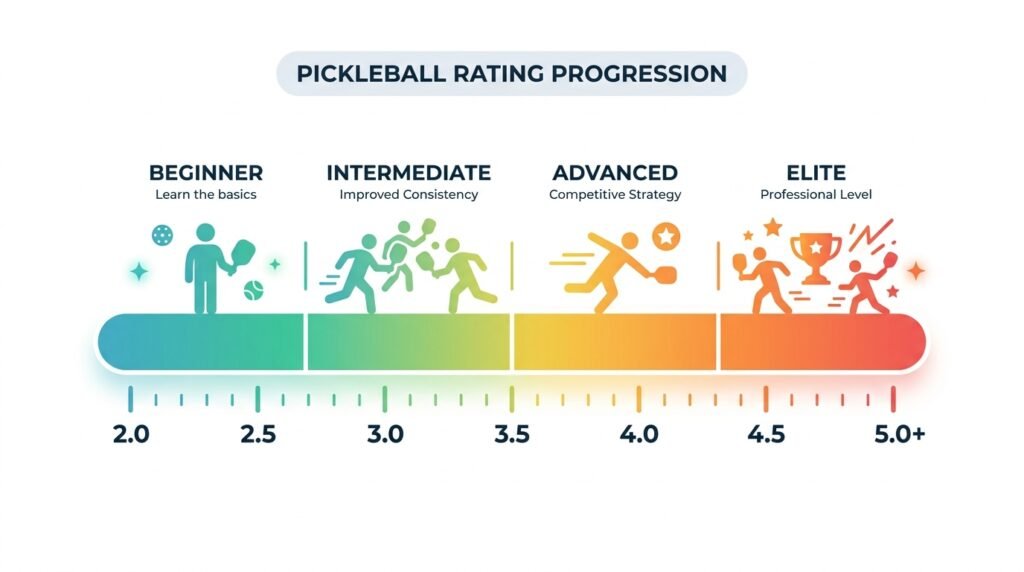
The scale itself runs from 2.0 to 5.0+, usually in half-point increments (2.0, 2.5, 3.0, 3.5, 4.0, 4.5, 5.0+). Most recreational players fall somewhere between 3.0 and 4.0. Ratings below 2.0 are rare outside of someone’s very first session, and ratings above 5.0 are reserved for players competing at a near-professional level.
The Full Pickleball Levels Breakdown (2.0-5.0+)
Here’s what a player actually looks like at each stage of the pickleball skill levels scale.
| Rating | Skill Description | Typical Player Traits |
| 2.0 | Beginner | Learning basic rules and scoring, inconsistent contact, limited shot control, rallies are short |
| 2.5 | Advanced Beginner | Can sustain a short rally, understands the kitchen rule, still struggles with dinking and soft shots |
| 3.0 | Lower Intermediate | Consistent serve and return, developing a dink game, starting to understand court positioning |
| 3.5 | Intermediate | Reliable third shot drop, controls pace, reads opponents, minimizes unforced errors |
| 4.0 | Advanced Intermediate | Strong shot variety, effective at the net, strategic shot placement, handles fast exchanges |
| 4.5 | Advanced | Near-flawless consistency, disguises shots, exploits opponent weaknesses, strong doubles communication |
| 5.0+ | Expert / Competitive | Tournament-level power and control, minimal unforced errors, elite strategy and anticipation |
2.0 to 2.5: Getting the Basics Down
At this stage, players are still learning where the ball is supposed to land and why the kitchen line matters. Rallies end quickly, mostly because of unforced errors rather than winning shots.
3.0 to 3.5: Building Real Control
This is where most players spend the longest stretch of their pickleball journey. A 3.0 player can keep a rally going. A 3.5 player can keep a rally going on purpose, placing the ball with intent instead of just getting it back over the net.
4.0 and Above: Strategy Takes Over
From 4.0 up, matches are decided by strategy and shot selection more than raw ability to hit the ball. Players at this level anticipate their opponent’s next move and set up points two or three shots in advance.
Self-Rating vs. Official DUPR Rating
Most players start by self-rating, meaning they estimate their own level based on how they compare to others at open play. It’s a reasonable starting point, but it’s subjective. Two 3.5 self-raters at two different courts can play like completely different skill levels.
An official rating, like DUPR, removes the guesswork. DUPR calculates your rating from actual match results against other rated players, and it adjusts continuously as you play more matches. It’s the closest thing pickleball has to a universal scorecard, and it’s increasingly required for tournament brackets and competitive leagues.
If you’re not sure how your self-rating stacks up against a real number, check our DUPR Rating Guide page — how to get a DUPR rating for a full walkthrough of how the system works and how to get your first official rating.
How Skill Levels Affect Play Format
Your rating decides who you play with and how you’re matched up.
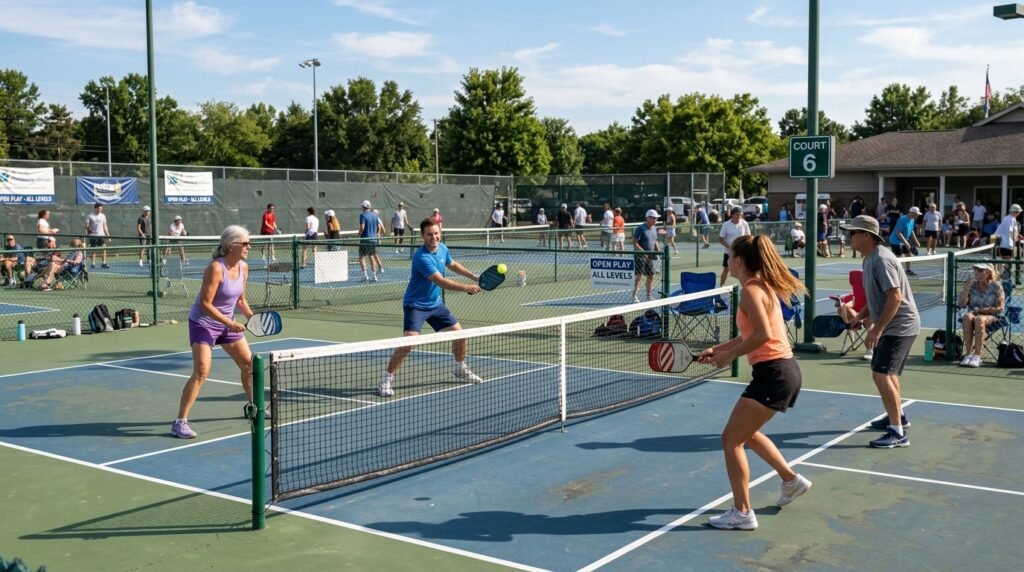
- Open play: Most facilities group players by skill level so games stay competitive and fun instead of lopsided. Check your local Court Directory page to find courts that run organized open play sessions.
- Tournament brackets: Tournaments almost always use skill divisions (3.0, 3.5, 4.0, etc.), and many now require a DUPR rating to register in the correct bracket.
- Round robins: Round robin formats typically mix players within a tight rating band, usually a half-point range, to keep every match close.
Playing above your actual level occasionally is a good way to improve, but signing up for a bracket well above your rating usually just means a rough day and unhappy partners.
Common Self-Rating Mistakes
Overrating. New players often rate themselves based on natural athleticism rather than actual pickleball skill. Being a strong tennis or racquetball player doesn’t automatically translate into a high pickleball rating.
Underrating. On the flip side, some players stay stuck at a lower self-rating out of habit, even after their game has clearly improved. This usually happens when someone plays with the same group for years and never tests themselves against new competition.
Rating based on wins alone. Beating a weaker group doesn’t make you a stronger player. Skill level is about what you can consistently execute, not who happened to be on the other side of the net.
How to Move Up a Level
Climbing from one pickleball skill level to the next comes down to a few specific, repeatable habits:
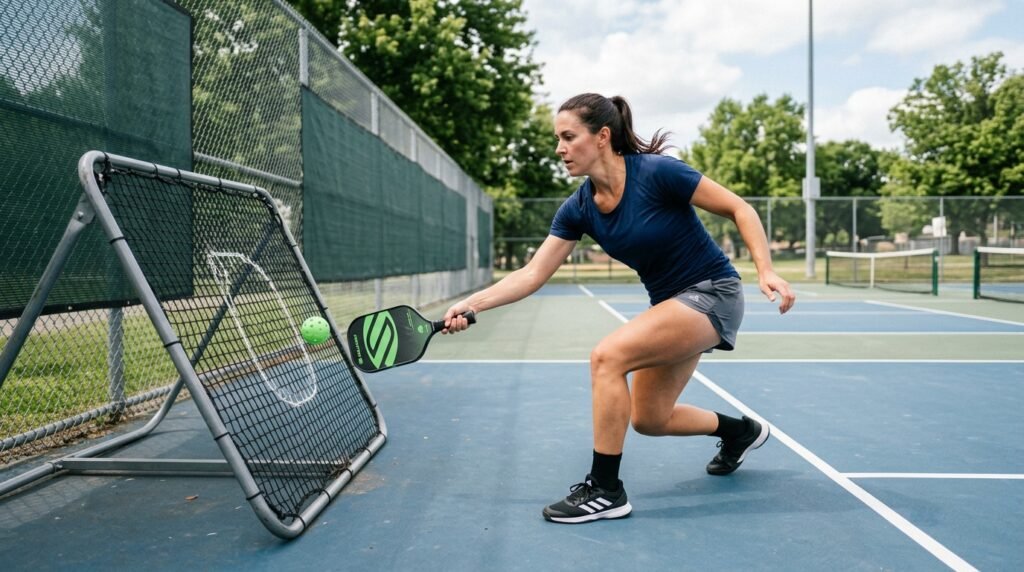
- Drill your weakest shot, not your favorite one. Most players default to practicing what they’re already good at. Real progress comes from targeting the shot that breaks down under pressure, usually the third shot drop or the backhand dink.
- Play up, not just around. Regularly playing against players one level above you exposes gaps in your game faster than beating players below you ever will.
- Get coached feedback, even briefly. A single lesson focused on shot mechanics can fix habits that would otherwise take months to unlearn on your own.
- Track your actual rating. Whether it’s DUPR or a club ladder, having a real number to measure against keeps practice focused instead of vague.
- Review your doubles strategy. A huge chunk of the jump from 3.5 to 4.0 comes down to court positioning and communication with your partner. Our Doubles Strategy breaks down positioning, poaching, and stacking in more detail.
FAQ
What level am I if I’m a beginner?
Most brand-new players start around 2.0 to 2.5. If you can rally a handful of shots and understand basic scoring, you’re likely closer to 2.5.
Is 3.5 a good pickleball rating?
Yes. A 3.5 rating puts you solidly above the average recreational player. It means you have reliable shot control, a working third shot drop, and enough strategy to compete in most local leagues.
How do I know my skill level without a rating?
Play against players of different levels at open play and pay attention to where you consistently win, lose, or split matches evenly. That’s usually the clearest sign of where you actually stand until you get an official rating through DUPR.
Does my pickleball rating ever go down?
With a self-rating, it can drift if you don’t play often. With DUPR, your number moves based on match results, so a rough stretch of losses can lower it just as wins can raise it.
How long does it take to move up a level?
It varies widely, but many players who drill consistently and play up in competition see meaningful jumps within one to two seasons.