 Rules
How to Serve in Pickleball: Rules for Beginners
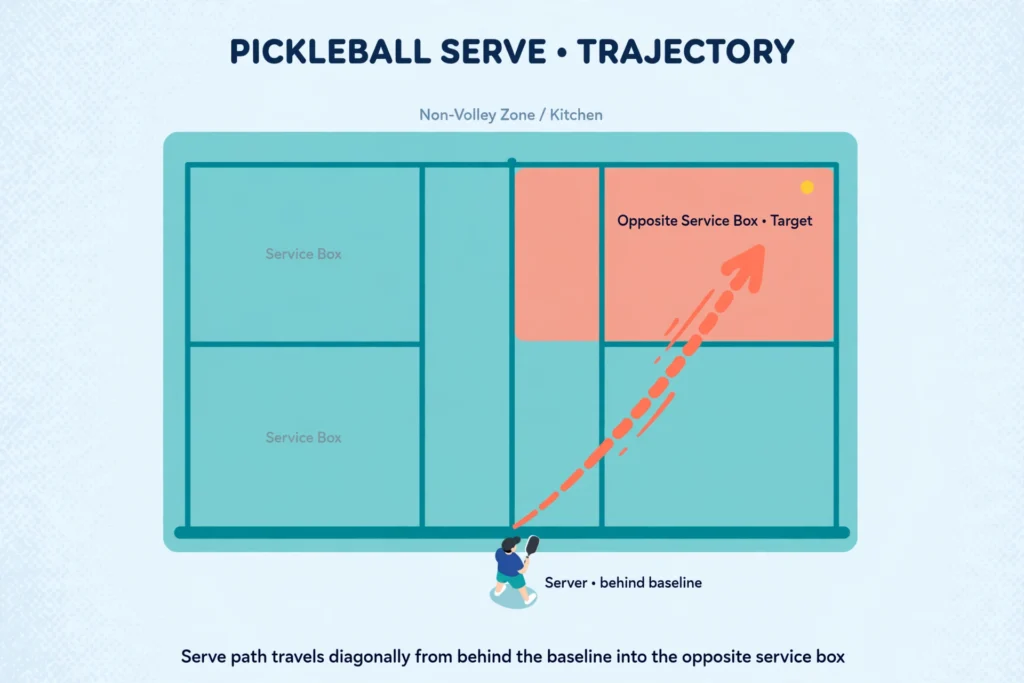
Short answer: hit the ball underhand, below your waist, with an upward motion, from behind the baseline, diagonally into the opposite service box. If you are wondering how do you serve in pickleball legally every single time, that sentence is the whole formula.
The serve is the one shot you fully control. No opponent, no surprises. So it should also be the most reliable shot in your game. This guide covers the five serving rules, the two legal serve types, who serves when, and the mistakes that turn free points into faults.
What Are the 5 Serving Rules in Pickleball?
These apply to the standard volley serve, the one nearly every beginner learns first:
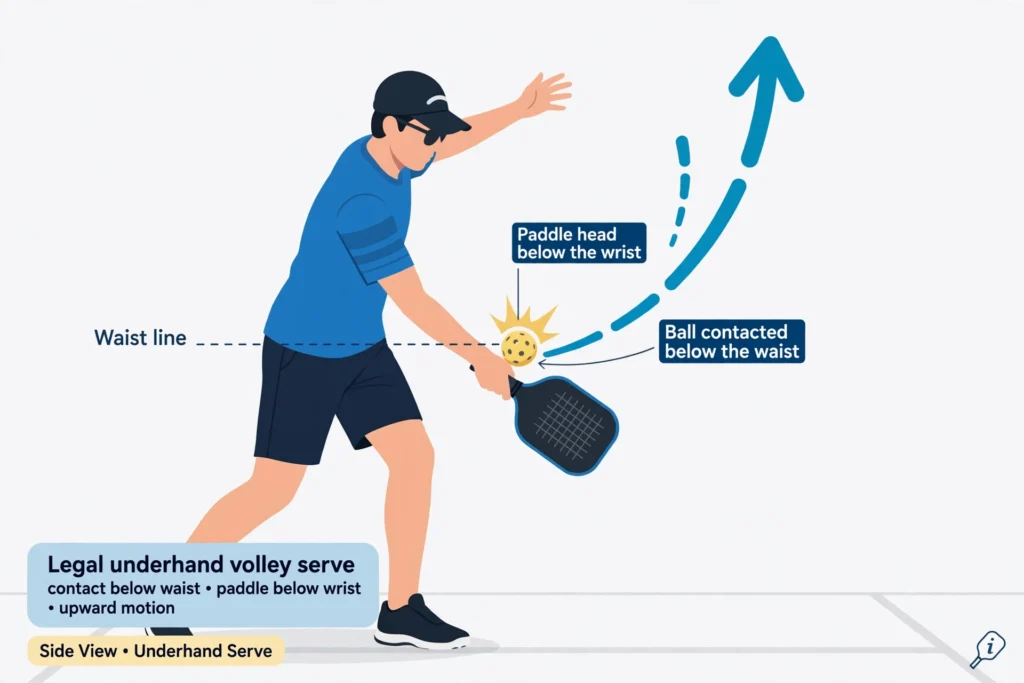
- Underhand with an upward arc. Your arm must swing in an upward motion. No overhand, no sidearm chop.
- Contact below the waist. The ball must be struck at or below waist level (your navel is the reference point).
- Paddle head below the wrist. At the moment of contact, the highest point of the paddle head cannot be above your wrist.
- Feet behind the baseline. At contact, neither foot may touch the baseline or the court. One foot must be on the ground behind the line.
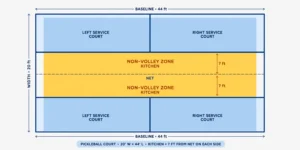
- Serve diagonally into the correct box. The serve must travel crosscourt and land past the non-volley zone line, inside the opposite service box.
Two extra timing rules: call the full score before you serve, and serve within 10 seconds of calling it.
Volley Serve vs Drop Serve: The Two Legal Options
| Volley Serve | Drop Serve | |
|---|---|---|
| Ball release | Tossed from the hand (no spin added) | Dropped from the hand or paddle, no force |
| Swing | Must be upward arc | No arc restriction after the bounce |
| Contact point | Below the waist, paddle below wrist | Any height, once the ball bounces |
| Best for | Consistency and control | Players who struggle with the toss |
The drop serve is fully legal and often easier for beginners, because the bounce gives you a clean, predictable contact point. There is no shame in using it while your volley serve develops.
Can You Serve Overhand in Pickleball?
Short answer: no, not with a volley serve. The rules require an upward underhand motion with contact below the waist, so an overhand serve is a fault.
With a drop serve, the restrictions loosen: once the ball bounces, there is no rule about your swing path or contact height. Technically you could strike downward after the bounce. But it rarely helps. A hard overhand-style serve is tougher to keep in, and in pickleball the serve is a setup shot, not a weapon. Depth and consistency beat pace every time.
Who Serves in Pickleball?
In doubles: both partners on a team get to serve, except for the very first service turn of the game, when only one player serves. After that, service passes to the opponents once both partners have served and lost their rallies.
The score call tells you who serves. In doubles the server announces three numbers: your score, the opponents’ score, then the server number (1 or 2). For example, “4-2-1” means your team has 4, they have 2, and you are the first server.
In singles: it is simpler. The serve goes to the opponent whenever the server loses a rally, and you serve from the right side on even scores and the left side on odd scores.
What NOT to Do on the Serve
Don’t rush it. Have a pre-serve routine: bounce the ball, set your feet, breathe. Most serve faults come from rushing, not bad technique.
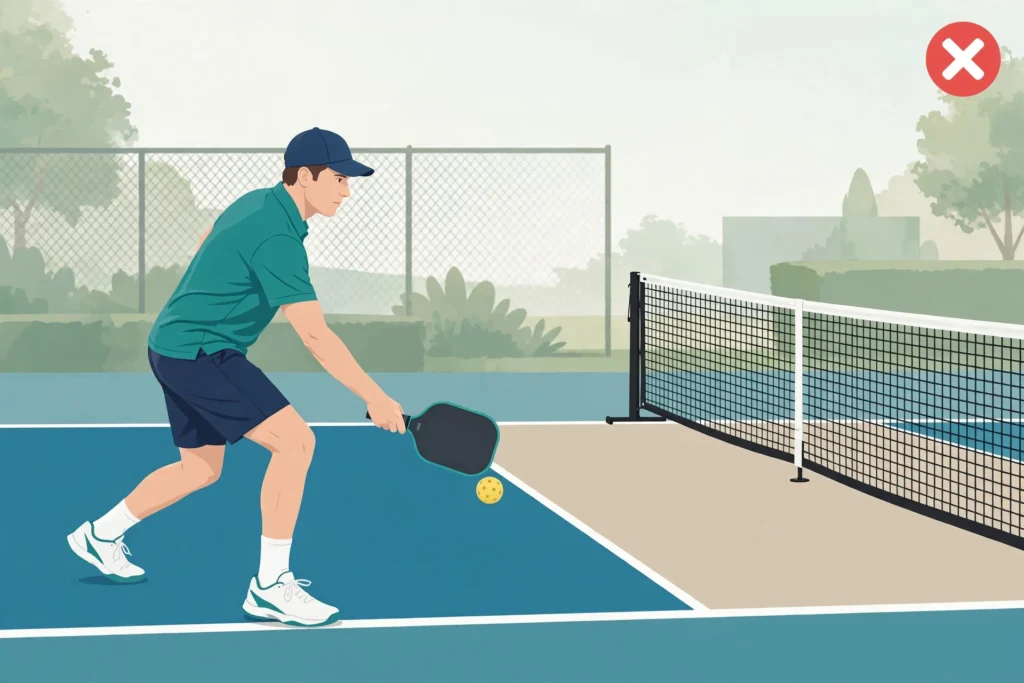
Don’t aim at the lines. Aim two to three feet inside the baseline and sideline. A deep, safe serve that lands in beats a perfect serve that lands out.
Don’t step on the baseline. Check your feet before every serve. A toe on the line at contact is a fault, and it is completely avoidable.
Don’t add spin to the toss. On a volley serve, you cannot impart spin when releasing the ball. Just drop or toss it cleanly.
Don’t try to win the point with the serve. At recreational levels, the serve almost never wins points outright. Its job is to start the rally on your terms and buy time for your third shot.
Simple Serving Strategy: Play Smarter, Not Harder
You do not need a powerful serve. You need a deep, boring, repeatable one.
- Serve deep. Push the returner behind the baseline so their return travels farther and gives you more time.
- Serve to the backhand. Most players’ backhands break down first. Find it early and keep testing it.
- Vary placement, not effort. Move the serve around the box: wide, middle, at the body. Same swing, different target.
- Follow your serve in. Take a step or two toward the kitchen line after serving so you are ready for the third shot.
This is Coach Claire’s whole philosophy in one shot: you don’t need to be the fastest player on the court. You need to be the smartest.
If you want the serve plus the other 99 match-day edges organized into one system, The Ultimate Pickleball Playbook covers serve placement, return strategy, positioning, and the mental resets that decide close games.
FAQ
How do you serve in pickleball?
Hit the ball underhand below your waist with an upward arc, paddle head below your wrist, feet behind the baseline, diagonally into the opposite service box past the kitchen line.
Can you serve overhand in pickleball?
No. A volley serve must be underhand with an upward motion and contact below the waist. An overhand serve is a fault.
What are the 5 serving rules in pickleball?
Underhand upward arc, contact below the waist, paddle head below the wrist, feet behind the baseline at contact, and a diagonal serve landing past the non-volley zone in the correct service box.
Who serves in pickleball?
In doubles, both partners serve in turn (except the first service turn of the game, when only one serves). In singles, the serve passes to the opponent whenever the server loses the rally.
What is a drop serve in pickleball?
A legal alternative serve where you drop the ball (no toss, no added spin) and hit it after it bounces. There are no restrictions on swing path or contact height once the ball has bounced.
Does the serve have to clear the kitchen in pickleball?
Yes. The serve must land beyond the non-volley zone line. A serve landing in the kitchen, on the kitchen line, is a fault. Learn exactly when you can step in the kitchen in pickleball in our kitchen rules guide.
How do you serve in pickleball?
Hit the ball underhand below your waist with an upward arc, paddle head below your wrist, feet behind the baseline, diagonally into the opposite service box past the kitchen line.
Can you serve overhand in pickleball?
No. A volley serve must be underhand with an upward motion and contact below the waist. An overhand serve is a fault.
What are the 5 serving rules in pickleball?
Underhand upward arc, contact below the waist, paddle head below the wrist, feet behind the baseline at contact, and a diagonal serve landing past the non-volley zone in the correct service box.
Who serves in pickleball?
In doubles, both partners serve in turn (except the first service turn of the game, when only one serves). In singles, the serve passes to the opponent whenever the server loses the rally.
What is a drop serve in pickleball?
A legal alternative serve where you drop the ball (no toss, no added spin) and hit it after it bounces. There are no restrictions on swing path or contact height once the ball has bounced.
Does the serve have to clear the kitchen in pickleball?
Yes. The serve must land beyond the non-volley zone line. A serve landing in the kitchen, on the kitchen line, is a fault.
Ready to stop losing points you shouldn’t? Grab The Ultimate Pickleball Playbook and start playing with a plan.