 How To
Can You Play Pickleball on a Tennis Court? Here’s the Real Answer
Short answer: yes. Longer answer: yes, but a tennis court isn’t a pickleball court just because you show up with paddles. The lines are wrong, the net is too high, and the space is way bigger than you need. You can absolutely make it work people do it in parking lots and driveways too, but there’s a right way to set it up and a handful of things that trip up almost everyone the first time.
If you’ve got a tennis court nearby and no dedicated pickleball court in sight, this is everything you need to actually play a real game on it.
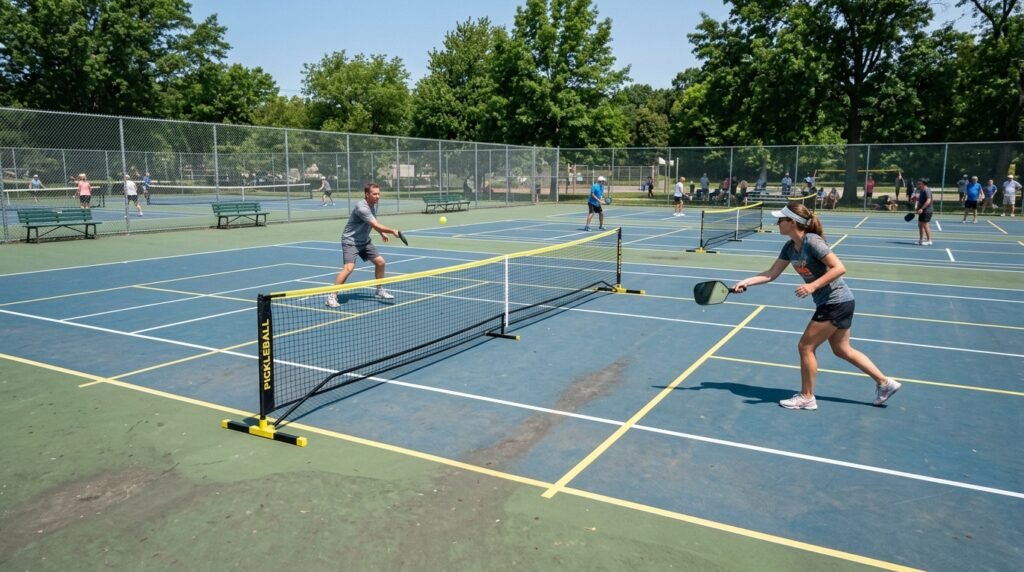
Why This Question Even Comes Up
Pickleball grew faster than the courts did. That’s the whole story. Every city has tennis courts sitting empty at 10am on a Tuesday, and dedicated pickleball courts are still catching up in a lot of places, especially outside the bigger metro areas. So naturally, people look at an open tennis court and think: why not just use this?
It’s a completely reasonable instinct. Tennis and pickleball courts overlap in a lot of ways, same general rectangle shape, same idea of a net splitting the court, same “don’t hit it out of bounds” concept. But the actual dimensions and rules are different enough that you can’t just play pickleball rules on tennis lines and call it good. You’ll end up arguing about whether a shot was in, because the lines you’re using don’t mean what you think they mean.
Tennis Court vs. Pickleball Court: The Actual Numbers
Here’s where the confusion usually starts, so let’s just lay out the real measurements.
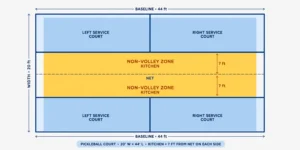
A regulation pickleball court is a rectangle measuring 20 feet wide and 44 feet long, for both singles and doubles matches, that’s the same for both, unlike tennis where singles and doubles use different width lines. The court includes a 7-foot non-volley zone on each side of the net, running the full width between the sidelines, which is the “kitchen” you’ve probably heard people yell about.
Net height for pickleball sits at 36 inches where it meets the sidelines, and it’s designed to sag slightly lower toward the middle, that dip is intentional, not a sign your net is broken.
A tennis court, by comparison, is a much bigger piece of real estate. The doubles playing area alone is 78 feet long by 36 feet wide, and that’s before you count the extra run-off space around the outside that most courts include for players to move in. Net height in tennis is 3 feet at the posts and 3 feet even at the center no sag by design, unlike pickleball.
So the core issue: a tennis court is roughly four times the square footage a pickleball court needs, and the net sits at the wrong height entirely. You’re not just missing lines. You’ve got the wrong amount of space and the wrong net for the sport.
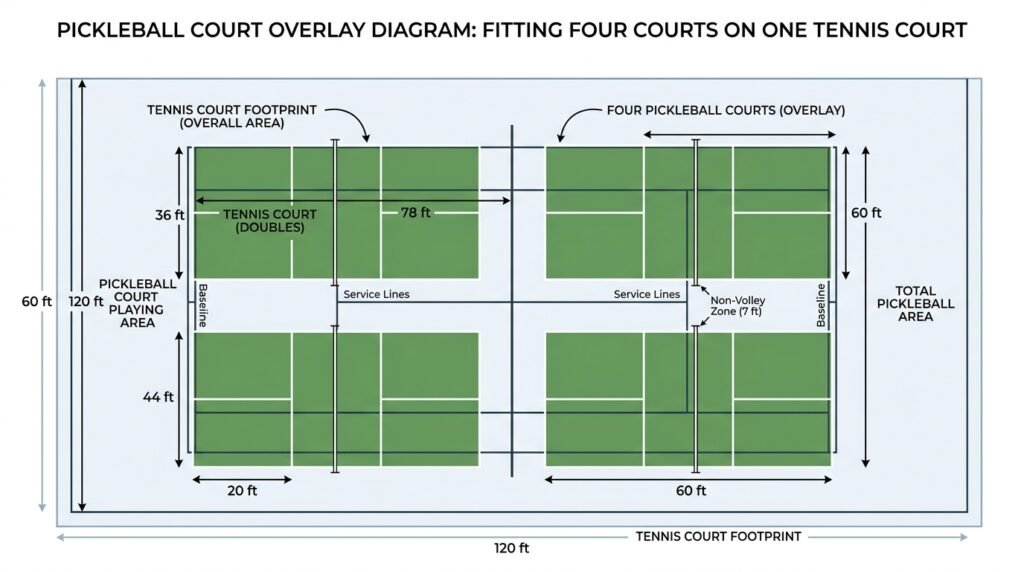
How Many Pickleball Courts Fit on One Tennis Court
This is the number everyone actually wants, so here it is straight: you can fit up to 4 pickleball courts on a single tennis court if you’re using the full tennis court footprint, including the surrounding run-off space beyond the playing lines. That’s the standard used by a lot of parks departments when they permanently convert tennis courts into dedicated pickleball courts with painted lines and separate nets.
But if you’re setting up a casual, temporary game and only taping within the existing tennis court boundary itself no extra margin beyond the tennis lines you’ll realistically fit 2 pickleball courts side by side, running across the width of the tennis court. Try to squeeze in more than that without the extra buffer space and players will be constantly crossing into each other’s court chasing wide shots. It’s not fun, and it’s not safe if there’s more than one game going at once.
If you’re only playing one game and have the whole tennis court to yourself, don’t bother marking two courts. Just tape one pickleball court somewhere in the middle and enjoy the extra room around it.
How to Set Up a Pickleball Court on Tennis Court Lines
If you want to actually play a proper game and not just knock a ball around, here’s what you need and how to do it.
1. Get a portable net. This is non-negotiable. The tennis net is too tall and spans too much width pickleball needs its own net at the correct height. A collapsible portable pickleball net runs anywhere from $60 to $150 and packs down small enough to carry in a car trunk. Don’t try to prop up something improvised; it changes how the ball bounces off the tape and makes line calls harder.
2. Set net height correctly. 36 inches at the sidelines, dipping to 34 inches at the center. Most portable nets have adjustable straps for this check it with a tape measure before you start, because eyeballing it is exactly how people end up with a net that plays like a wall.
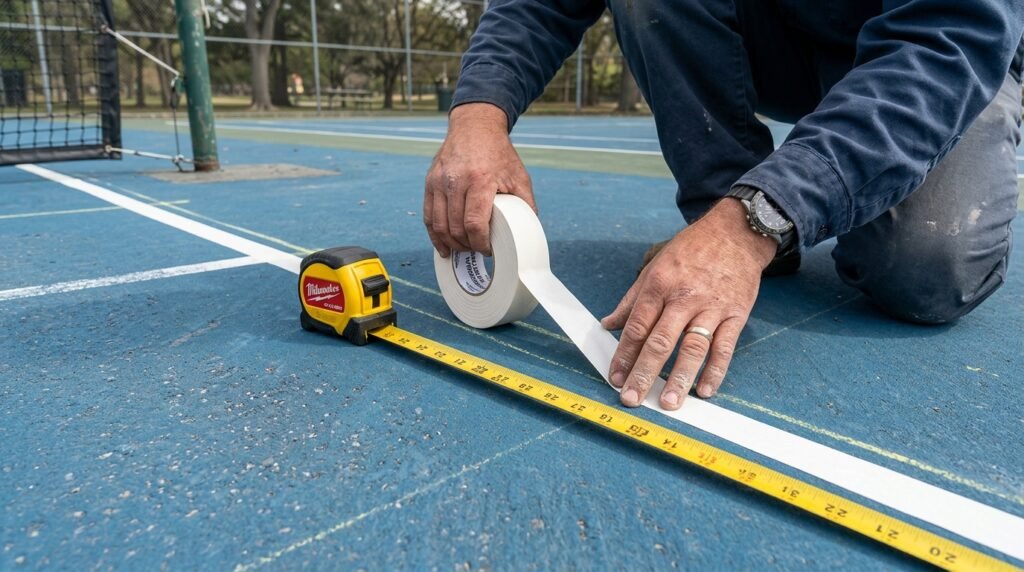
3. Mark your lines with removable tape, not paint. Painter’s tape or actual pickleball court marking tape (sold specifically for temporary setups) works well on hard courts. Chalk works too but wears off fast and can be a slip hazard when wet. Never use permanent paint on a tennis court you don’t own more on that below.
4. Measure the full 20 x 44 footprint, including the 7-foot kitchen on each side of the net and the centerline splitting the back court into service boxes. Skipping the kitchen line is the single most common shortcut people take, and it changes the entire character of the game dinking and soft game strategy basically disappear without it.
5. Double-check your baseline space. You want a few feet of run-off behind each baseline so players aren’t backing straight into a fence or another court mid-rally.
What People Get Wrong
A few mistakes show up over and over with tennis-to-pickleball conversions, and almost all of them are avoidable.
Using the tennis net height. People set up on the tennis net because it’s already there, figuring it’s close enough. It’s not. Three inches might not sound like much, but it noticeably changes how shots clear the net, especially soft dinks near the kitchen. If you’re serious about the game feeling right, bring your own net.
Painting permanent lines on a court you don’t own. This one’s worth being blunt about: don’t do it. Public tennis courts are maintained by parks departments or HOAs, and taping is reversible paint isn’t. Showing up with a can of court paint on a shared public court is a good way to get the whole thing shut down to pickleball players entirely, which has actually happened in places where this went badly. Tape it, play, pull the tape up when you’re done.
Ignoring the non-volley zone. Some people skip taping the kitchen line because it feels like an extra step, then just play “no volleying near the net” by memory. It doesn’t work. Without a visible line, calls turn into arguments, and the game loses the strategic depth that makes pickleball what it is.
Not accounting for multiple courts crossing. If you’re squeezing two pickleball games onto one tennis court, make sure there’s real space between them. Balls flying into the neighboring court mid-point is annoying at best and a collision risk at worst.

When Taping a Tennis Court Actually Makes Sense
Taping a tennis court is a great move when you’ve genuinely got no other option nearby, you’re setting up for a one-off game with friends, or you’re introducing someone to the sport and don’t want to drive across town to find a real pickleball court. It’s also a solid call if you’re testing whether you even like the game before spending money on gear or joining a league.
It’s not worth the hassle when there’s a dedicated court five or ten minutes away. Real pickleball courts already have the correct lines, the right net height, proper surface texture in some cases, and usually other players around to hit with. Taping and hauling a net is a workaround, not an upgrade use it when you need to, skip it when a real option already exists.
If you’re not sure what’s near you, this is exactly the kind of thing worth checking before you buy tape and a net you didn’t need: Court Directory page.
What About the Surface Itself?
Good news here: tennis courts are usually totally fine to play pickleball on. Same hard court surface, same general grip, and pickleball paddles and balls don’t put unusual stress on the ground the way some other sports might. If the tennis court is well-maintained, you’re not giving anything up by playing on it surface-wise.
The one thing worth knowing: pickleball’s underspin and quick direction changes put a bit more emphasis on court traction during fast exchanges near the net. If a tennis court has any slick or worn patches, particularly in high-traffic areas near the net posts, you’ll notice it more in pickleball than you would in tennis, just because the game happens at closer range with quicker feet. Not a dealbreaker, just something to be aware of if the court’s seen better days.
FAQ
Is pickleball played on a tennis court?
Not in official tournament play pickleball has its own dedicated courts with different dimensions. But casually, yes, plenty of people play pickleball on tennis courts by taping temporary lines and bringing a portable net.
Can pickleball be played on a tennis court without any setup?
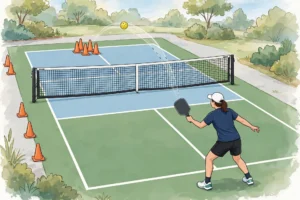
Not really, no. You need a lower net at minimum, and ideally taped lines, or you’ll be arguing about boundaries the entire time. It’s playable in a pinch with just cones marking rough zones, but it won’t feel like a real game.
Are tennis and pickleball courts the same size?
No, and it’s not close. A pickleball court is 20 by 44 feet. A tennis doubles court is 78 by 36 feet roughly four times the space, once you include typical run-off area.
How many pickleball courts fit on a tennis court?
Up to 4 if you’re using the full tennis court footprint including surrounding space. If you’re only taping within the existing tennis lines, plan on 2 side by side for a comfortable, safe setup.
Do I need special shoes to play pickleball on a tennis court?
Standard tennis or court shoes work fine. You want something with lateral support since pickleball involves a lot of quick side-to-side movement, not running shoes built for straight-line motion.