 How To
10 Ways to Get Better at Pickleball Fast
Short answer: drill the shots that decide points, stop giving away free errors, and play with a plan. If you are wondering how to get better at pickleball without spending years losing the same way, these ten adjustments are where the fastest improvement comes from.
Getting good at pickleball is not about secret techniques. It is about doing the boring fundamentals better than the person across the net. Here are the ten changes that move recreational players up the fastest.
1. Drill the Third-Shot Drop Until It’s Automatic
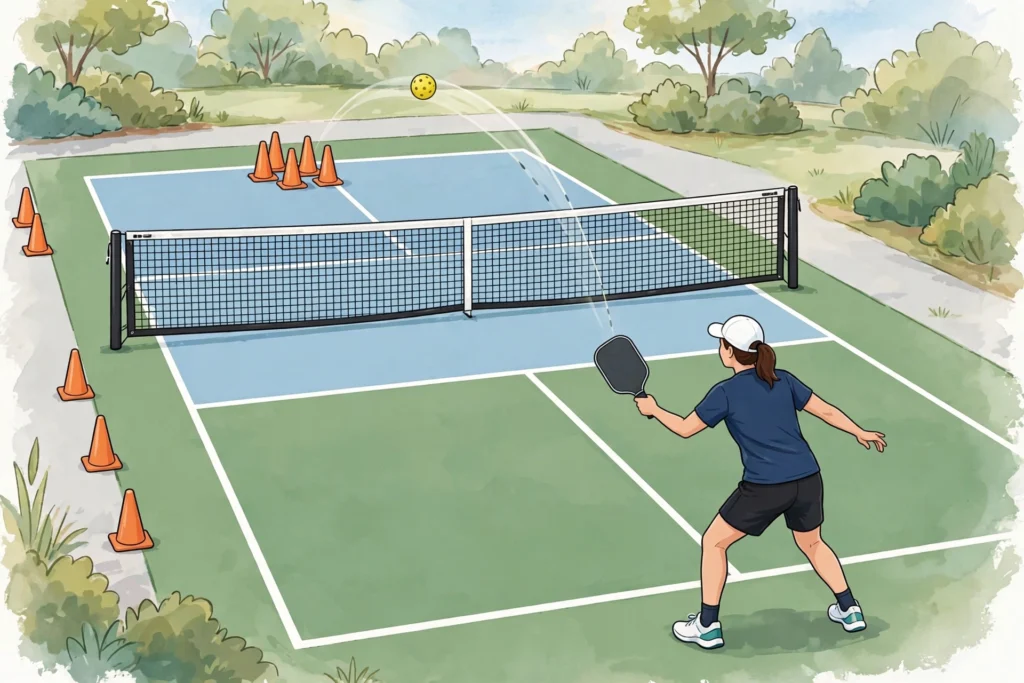
The third shot decides more rallies than any other. After the serve and return, the serving team is stuck at the baseline while the returners rush the net. A soft third-shot drop into the kitchen buys you time to move forward.
How to practice it: stand at the baseline, have a partner feed you balls at the kitchen line, and drop 50 in a row into the kitchen. When you can do that, you have a shot most 3.0 players don’t.
2. Win the Dink Game With Patience
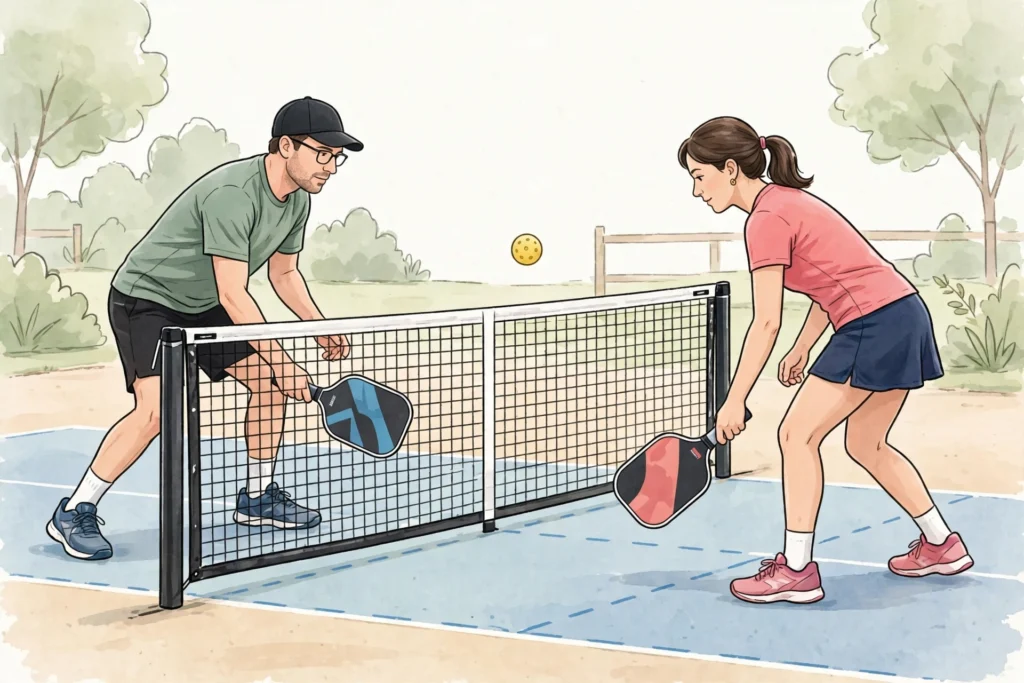
Most points at the recreational level are lost, not won, at the kitchen line. Players get impatient, speed up a ball they shouldn’t, and pop it up for an easy putaway.
The fix: dink with a purpose. Keep the ball low and to your opponent’s backhand, move them side to side, and wait for the ball that sits up. Patience at the net is a weapon.
3. Serve Deep Every Single Time
A short serve hands the returner an easy aggressive return. A deep serve pushes them behind the baseline and buys you time. This is the simplest tactical upgrade in the game, and it costs nothing.
Pick a target two feet inside the baseline and hit it on every serve. If you want the full breakdown, read our guide on how to serve in pickleball.
4. Return Deep and Get to the Line
Your return should do two jobs: land deep, and give you time to reach the kitchen line. A deep return keeps the serving team pinned back; getting to the line yourself takes away their angles.
Hit your return with margin, then move. The team that owns the kitchen line first wins most rallies.
5. Stop Feeding the Forehand
Watch where your opponents hurt you. It is almost always their forehand. Most recreational players have a forehand they trust and a backhand they don’t.
Make it a rule: when in doubt, hit to the backhand. Keep a mental count during the first few points of where the weak replies come from, then keep going there until they prove they can handle it.
6. Own the Middle in Doubles
The middle of the court causes more partner confusion than anything else in doubles. Balls drop between two hesitant players every single game.
Fix it before the match: agree that the player with the forehand angle takes the middle ball. Call “mine” loudly. One clear rule eliminates the most common doubles error.
7. Reset Instead of Forcing
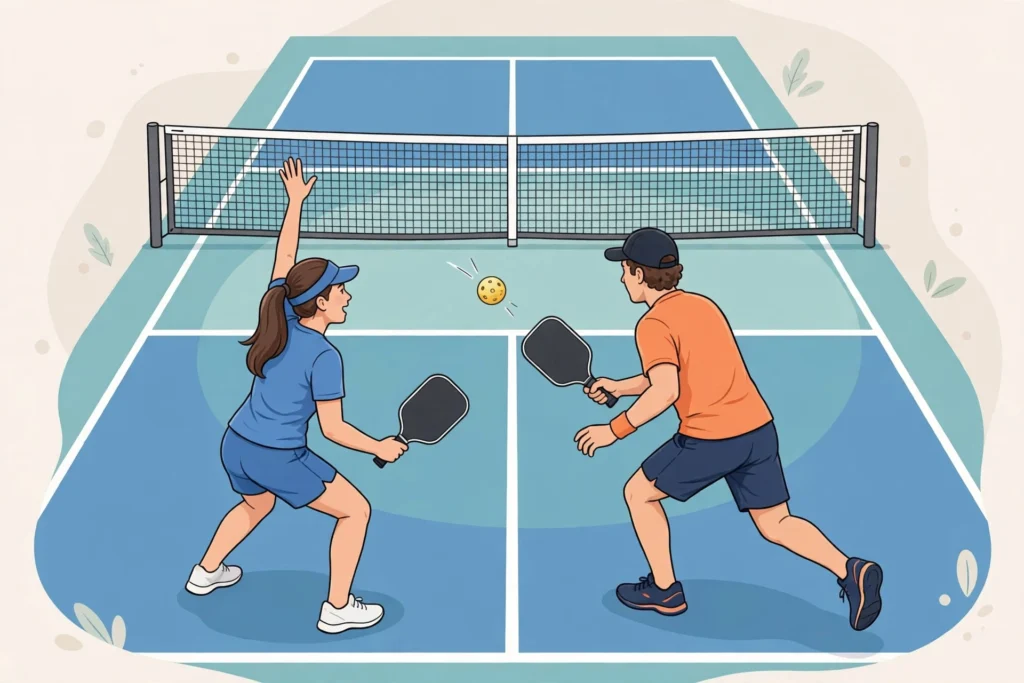
When a rally speeds up and you are off balance, the winning play is usually a reset, not a counterattack. A soft block or drop into the kitchen neutralizes the point and lets you start over.
Amateurs try to win every ball. Better players know which balls to win and which to survive. Learn the reset and your unforced errors will drop immediately.
8. Split-Step and Watch the Ball
Most players watch their shot instead of their opponent’s paddle. By the time they look up, the ball is already coming back.
Build the habit: after every shot you hit, split-step (small hop, feet set) as your opponent strikes the ball, and watch their paddle face. The paddle tells you where the ball is going before it gets there.
9. Play With Better Players
You improve at the speed of your competition. One session a week against players a level above you teaches more than a month of comfortable games.
Don’t worry about losing. Ask questions between games. Better players will expose exactly which parts of your game break down, and that is the most valuable feedback in pickleball.
10. Build a Between-Point Routine
The fastest way to get good at pickleball might be mental, not physical. Most losing streaks within a match come from carrying one mistake into the next three points.
Build a reset routine: after each point, turn away, take a breath, decide your plan for the next point, then step back in. Ten seconds of reset beats ten minutes of frustration.
The Fastest Path: One Skill at a Time
Trying all ten at once is a recipe for changing nothing. Pick the one that costs you the most points right now, drill it for two weeks, then add the next.
That is also how Coach Claire frames the whole game: you don’t need to be the fastest player on the court. You need to be the smartest. Small, deliberate upgrades compound faster than any single trick.
If you want all of it organized into a match-day system, The Ultimate Pickleball Playbook gives you 100 court-tested tactics across positioning, shot selection, partner play, and the mental game, plus a printable toolkit for match day.
FAQ
How to get better at pickleball fast?
Drill the third-shot drop, dink patiently, serve and return deep, target backhands, own the middle in doubles, reset instead of forcing, and build a between-point routine.
How to be good at pickleball?
Be consistent first. Keep the ball in play, cut unforced errors, learn the kitchen rules (when you can step in the kitchen in pickleball), and play with a plan instead of just reacting.
How to get good at pickleball as a beginner?
Master the serve, the deep return, and the dink before worrying about advanced shots. Play regularly, drill one weakness at a time, and find better players to learn from.
How to win at pickleball?
Win the kitchen line battle, attack only balls you can put away, target the weaker opponent and the weaker backhand, and stay mentally steady between points.
How long does it take to get good at pickleball?
Most players rally comfortably within weeks and reach a solid recreational level within a few months of regular play. Focused drilling on the ten areas above shortens that timeline considerably.
How to get better at pickleball fast?
Drill the third-shot drop, dink patiently, serve and return deep, target backhands, own the middle in doubles, reset instead of forcing, and build a between-point routine.
How to be good at pickleball?
Be consistent first. Keep the ball in play, cut unforced errors, learn the kitchen rules, and play with a plan instead of just reacting.
How to get good at pickleball as a beginner?
Master the serve, the deep return, and the dink before worrying about advanced shots. Play regularly, drill one weakness at a time, and find better players to learn from.
How to win at pickleball?
Win the kitchen line battle, attack only balls you can put away, target the weaker opponent and the weaker backhand, and stay mentally steady between points.
How long does it take to get good at pickleball?
Most players rally comfortably within weeks and reach a solid recreational level within a few months of regular play. Focused drilling on the ten areas above shortens that timeline considerably.
Ready to stop losing points you shouldn’t? Grab The Ultimate Pickleball Playbook and start playing with a plan.