 Rules
Rules
Pickleball Faults Explained: When Does a Rally End?
Quick answer, since you’re probably reading this between points: a rally ends the moment either team commits a fault. A fault is any action that breaks a rule, like hitting the ball out of bounds, into the net, or volleying it while standing in the kitchen. Whoever didn’t commit the fault gets the outcome in their favor, either a point or the serve, depending on who was serving when it happened.
That’s the short version. If you want to actually stop arguing about it mid-game, keep reading, because the details matter more than people think.
What Counts as a Fault
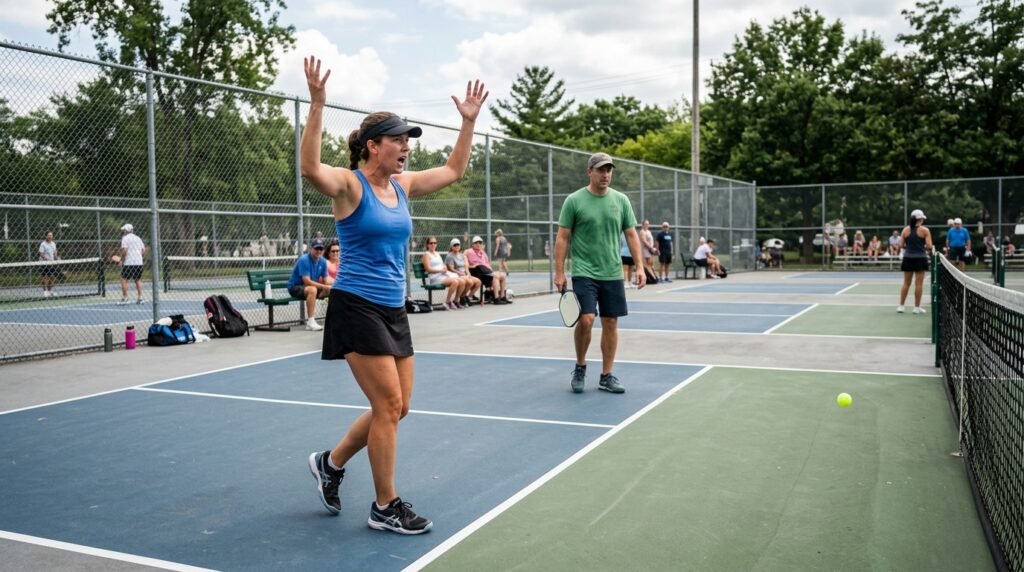
A fault is basically any rule violation that stops the rally right there. There’s a longer official list in the USA Pickleball rulebook, but here’s what actually shows up in a normal game.
The ball lands outside the court lines. Doesn’t matter how good the shot looked, if it’s out, it’s out.
The ball hits the net and doesn’t make it over. This includes serves, so a serve that clips the net and drops on your own side is a fault too.
A player hits the ball before it crosses the net to their side, or reaches over the net to hit it on the opponent’s side. Both are faults, even if the shot would’ve been a winner.
A player volleys the ball while standing in the kitchen, or while their momentum carries them into the kitchen right after the volley. This one catches people constantly, and we’ll get into why below.
Someone violates the two bounce rule, hitting the ball out of the air before it’s bounced once on each side after the serve.
The ball touches a player’s body or clothing, even if it never touches the ground.
A serve lands in the wrong service box, or doesn’t clear the kitchen on the serve.
Any of these stops the rally instantly. The point doesn’t keep playing out, it just ends the second the fault happens.
What Happens After a Fault
This is where side out scoring trips people up, so let’s walk through it plainly.
If the serving team faults, they lose their serve. No point is scored for the other team, the serve just passes over. In doubles, that usually means the serve moves to the second server on the same team, or over to the other team entirely if both servers on that side have already faulted out.
If the receiving team faults, the serving team scores a point and keeps serving. Same server, same side, they just go again.
So the team that didn’t commit the fault always comes out ahead, either with a point in hand or the serve. Nobody ever “loses” a rally without something happening in someone’s favor. That’s actually the whole design of the scoring system, every rally has a direct consequence.
Line Calls: In or Out?
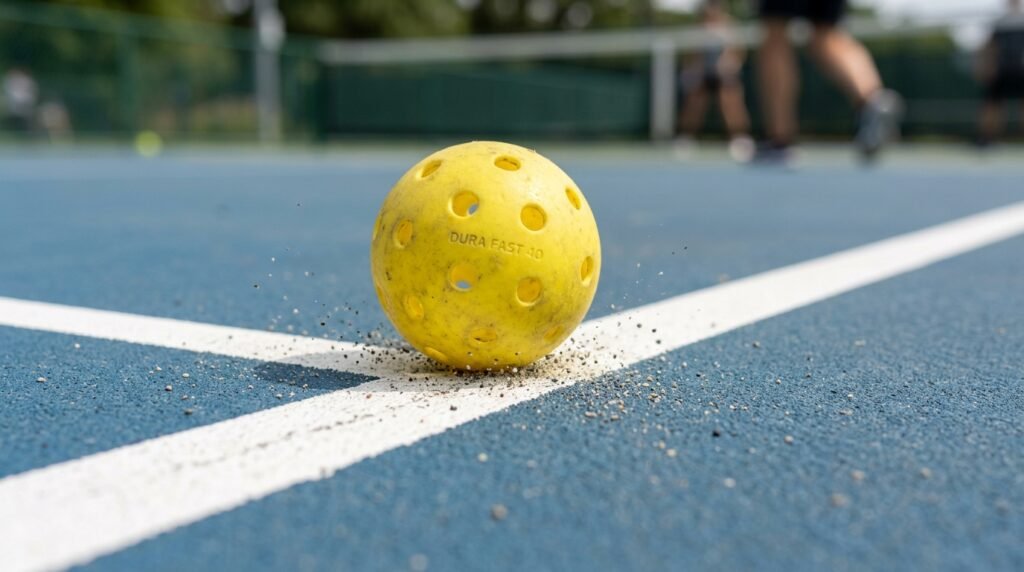
Here’s the rule that ends more courtside arguments than anything else: if any part of the ball touches the line, it’s in. The lines are part of the court, not the boundary of it. A ball has to land completely outside the line to be called out.
In casual and recreational play, players make their own line calls, usually whoever’s side the ball lands on. This works fine most of the time, but it’s also where disputes happen, especially on close calls near the baseline or sideline where nobody had a clean angle. The general etiquette is to give the benefit of the doubt to your opponent if you genuinely can’t tell. Calling it against yourself feels bad in the moment, but it’s a lot better than the alternative reputation.
In tournament play with referees or line judges, calls are made by officials, and at the higher levels some events use electronic line calling systems. But for the courts most people are playing on, it’s an honor system, and it works because most players actually want to play it straight.
The Faults Beginners Argue About Most
Three faults cause more courtside confusion than every other rule combined.
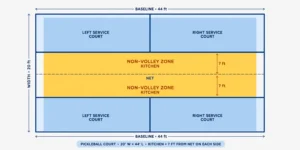
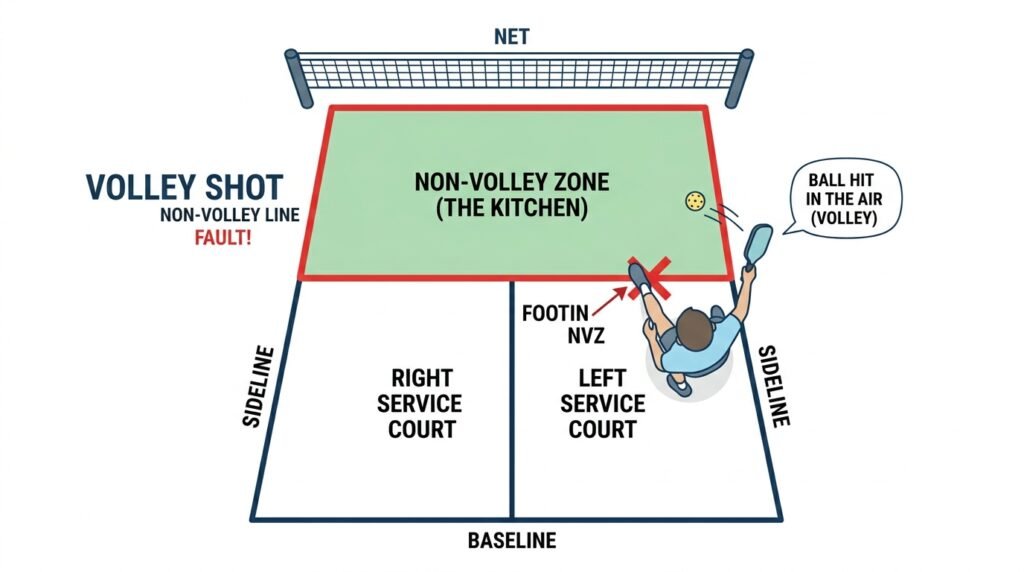
Kitchen violations. The kitchen, or non-volley zone, is the 7 foot strip on each side of the net. You can’t volley the ball while any part of your body touches that zone, including the line itself. Beginners usually know they can’t stand in the kitchen and hit the ball, but they forget that momentum counts too. If you volley a ball from just outside the kitchen and your foot lands inside it right after, that’s still a fault, but the short version is: if you’re not sure whether you were in, assume you were and give the point.
The two bounce rule. After the serve, the ball has to bounce once on the return side and once more on the serving side before anyone can volley it. Players get excited and try to rush the net right after their return, forgetting they can’t volley yet. It’s an easy mistake in your first few games, and it fades fast once you’ve had it called on you once or twice.
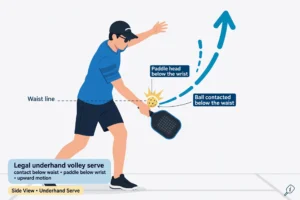
Serving faults. Serves have to be hit underhand, below the waist, and land in the correct diagonal service box past the kitchen line. A serve that clips the kitchen line on the way in doesn’t count as good, it’s a fault, since the ball has to clear the entire non-volley zone. We break down serve mechanics in more detail in our How to Serve in Pickleball article, including the footwork rules that trip up a lot of new servers.
Quick Reference Table
| Fault Type | Who Faulted | Result |
| Ball lands out of bounds | Either team | Point and serve go to the team that didn’t fault |
| Ball into the net | Either team | Point and serve go to the team that didn’t fault |
| Kitchen volley violation | Either team | Point and serve go to the team that didn’t fault |
| Two bounce rule violation | Either team | Point and serve go to the team that didn’t fault |
| Serve lands in wrong box or hits kitchen | Serving team | Serve passes to next server or other team |
| Serving team faults (any type) | Serving team | No point scored, serve passes over |
| Receiving team faults (any type) | Receiving team | Serving team scores a point, keeps serving |
Bookmark this if you’re new. It answers the argument faster than scrolling through the full rulebook mid-game.
FAQ
What is a fault in pickleball?
A fault is any rule violation that ends a rally immediately, like hitting the ball out of bounds, into the net, or volleying it while standing in the kitchen. The moment a fault happens, the rally stops, no matter how the point looked up to that moment.
When does a rally end in pickleball?
A rally ends the instant either team commits a fault. There’s no partial credit or replay in casual games, once the fault happens, the point is decided based on who was serving.
Is the line in or out in pickleball?
If any part of the ball touches the line, it’s in. The ball has to land fully outside the line to be ruled out. This is one of the most misunderstood rules in casual play, and it’s worth knowing cold before your next close call.
What happens if the serving team faults?
They lose their serve. No point is awarded to the other team, the serve just passes to the next server, or over to the opposing team if it was the last server on that side.
What happens if the receiving team faults?
The serving team scores a point and keeps serving from the same spot. This is why side out scoring rewards good defense just as much as good offense.
If you’re still getting the fundamentals down, our How to Play Pickleball Beginner’s Guide covers the full rundown of scoring, serving, and court basics from the ground up.
Knowing the rules keeps you in the game. The Ultimate Pickleball Playbook helps you actually win it.