 How To
How to Serve in Pickleball: The Complete Rules and Technique Guide
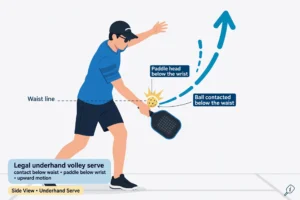
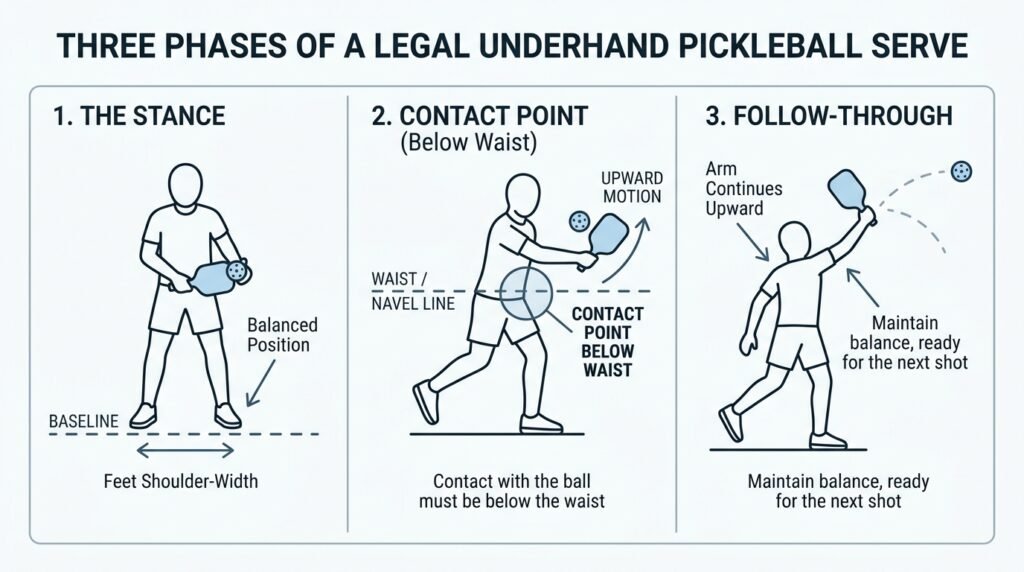
So, how do you serve in pickleball? You hit the ball underhand, below your waist, with the paddle head below your wrist, in an upward arc, sending it diagonally into the opponent’s service box. One foot has to stay behind the baseline at contact. Miss any of these and it’s a fault. That’s the short version. Here’s everything else you need to know to serve legally, consistently, and with enough spin or pace to make return tough.
Official Serving Rules of Pickleball
USA Pickleball recognizes two legal ways to serve: the volley serve and the drop serve. Both fall under the same official rules and procedures of serving in pickleball, but the swing restrictions differ.
Volley serve rules:
- Contact must be made below the waist.
- The paddle head must stay below the wrist at contact.
- The paddle must be moving in a clear upward arc when it hits the ball.
- As of the 2026 rulebook update, all three requirements must be “clearly” met. Referees no longer give the benefit of the doubt on borderline calls.
Drop serve rules:
- You drop the ball from a natural, unaided height and let it bounce before striking it.
- No restriction on paddle position, arm arc, or contact height.
- You can use a forehand or backhand motion, any swing you want.
- The ball can bounce any number of times before you hit it.
Rules that apply to both serve types:
- One foot must be behind the baseline (or the sideline/centerline that extends it) at the moment of contact. The other foot can be in the air but can’t be touching inside the court.
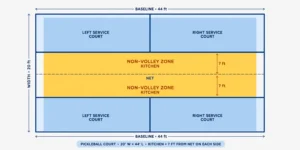
- The serve must travel diagonally, crosscourt, into the opponent’s service box.
- The ball must clear the non-volley zone (the kitchen) and its line entirely. Landing on the kitchen line is a fault.
- Only one serve attempt per turn, except when a let occurs (the ball clips the net but still lands in the correct box).
If you’re new to the game, pairing this with the Singles Rules article and the Kitchen/Non-Volley Zone article will fill in the rest of the rulebook you’ll actually use during a match.
Can You Serve Overhand in Pickleball?
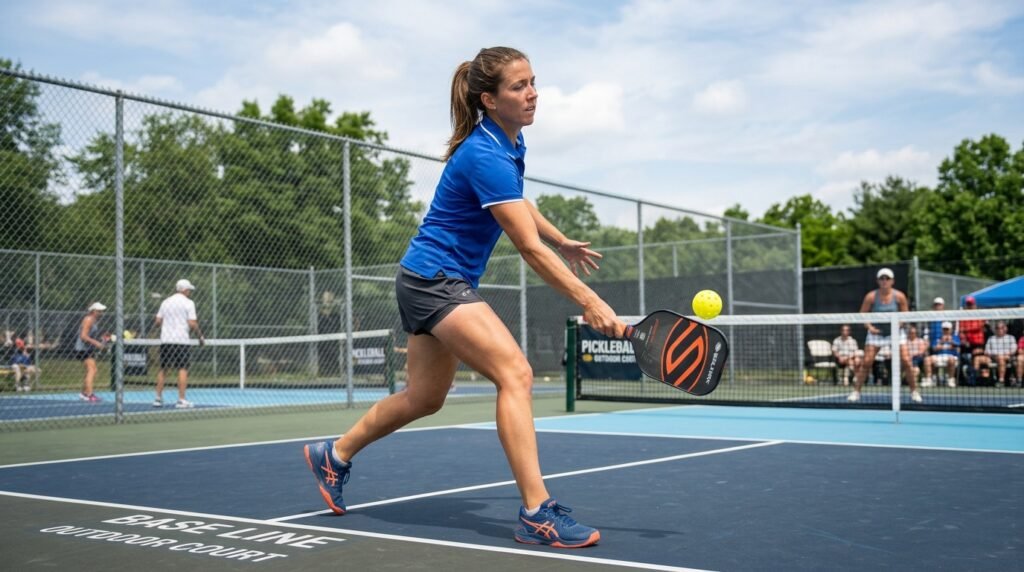
No. A traditional overhand serve, the kind you’d use in tennis, is not legal under standard pickleball rules. The volley serve requires an upward arc with contact below the waist and the paddle head below the wrist. An overhand motion breaks all three of those requirements at once.
The confusion usually comes from tennis players picking up a paddle for the first time. Tennis rewards a big overhead swing. Pickleball penalizes it. The rules were built to keep the serve low-risk and returnable, which keeps rallies going instead of turning the serve into an unreturnable weapon.
The closest thing to an overhand option is the drop serve, and even that isn’t overhand in the tennis sense. You’re still striking the ball after it bounces, typically with a compact forehand or backhand motion, not a high overhead swing.
How to Serve for Beginners: Step-by-Step
If you’re just starting out, the drop serve is the easier way to learn how to serve in pickleball for beginners. It removes the timing pressure of the volley serve’s arc and contact-height rules. Here’s how to build a clean serve from scratch.
1. Set your stance
Stand a foot or two behind the baseline, feet roughly shoulder-width apart, weight balanced. Angle your body slightly toward the direction you want the ball to travel, since the serve must go diagonally.
2. Choose your grip
A continental grip (the same one you’d use for a handshake with the paddle face vertical) gives you the most control for both volley and drop serves.
3. Release the ball
For a drop serve, hold the ball at a comfortable height and let it fall straight down with no added spin or push. For a volley serve, release the ball from your hand in front of you at a height that lets you strike it below your waist on the way up or at the top of a low toss.
4. Make contact
Swing with a smooth, low-to-high motion. Keep your paddle face slightly open to help the ball clear the net with a bit of arc. Contact should feel unrushed, not jabbed.
5. Follow through toward your target
Let your paddle continue toward the diagonal service box after contact. A short, abrupt swing kills consistency. A full follow-through gives you repeatable depth and direction.
6. Recover your position
After the serve, get back into a ready stance. The point starts immediately, and a slow recovery leaves you exposed to a fast return.
Common Serving Faults to Avoid
Even experienced players lose points to avoidable serve faults. Watch for these:
- Contact above the waist. The single most common fault on a volley serve, especially under the 2026 “clearly” standard where referees no longer guess in your favor.
- Paddle head above the wrist. Easy to miss on video review, hard to argue with a referee once it’s called.
- Downward or sidearm swing. The paddle must be moving upward at contact on a volley serve. A flat or chopping motion is a fault even if the ball goes in.
- Foot faults. Stepping on or over the baseline, or letting your non-planted foot touch inside the court, before contact.
- Serving to the wrong box. Especially common in doubles when players lose track of the score and server position.
- Landing on the kitchen line. The serve has to clear the non-volley zone completely. A serve that lands on the line is out.
Cleaning these up is mostly about repetition and knowing exactly where the lines are, both the court lines and the rule lines.
Quick Tips for a More Consistent Serve
- Practice a fixed toss or drop. Consistency in your release is the foundation of a consistent serve. Vary the swing, not the drop.
- Aim deep, not hard. A deep serve pushes your opponent back and limits their return options more than raw pace does.
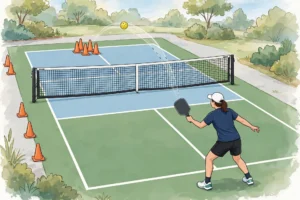
- Add a target. Place a cone or towel in the far corner of the service box and aim for it during practice reps.
- Mix up placement. Serving to the backhand or straight at the body disrupts return rhythm more than always going crosscourt to the same spot.
- Slow down under pressure. Rushed serves are where foot faults and contact-height errors creep in during real matches.
For players who want a full breakdown of legal contact and reach on serve returns, USA Pickleball’s official rulebook is worth bookmarking as a reference.
FAQ
Can you serve overhand in pickleball?
No. A tennis-style overhand serve breaks the below-the-waist, below-the-wrist, and upward-arc requirements of a legal volley serve. The drop serve is the closest legal alternative but still isn’t an overhead motion.
What are the official rules and procedures of serving in pickleball?
The server needs one foot behind the baseline, must hit the ball diagonally into the opponent’s service box, and must clear the non-volley zone. A volley serve must be underhand, below the waist, with the paddle head below the wrist. A drop serve removes those swing restrictions but requires a natural, unforced release.
How do you serve for beginners in pickleball?
Start with a drop serve. Let the ball fall naturally, then strike it after the bounce with a smooth forehand or backhand motion aimed diagonally. It removes the timing pressure of the volley serve’s contact-height rule while you build consistency.
Do you get a second serve in pickleball?
No. Unlike tennis, there’s no second serve. One fault ends your service turn, except in the case of a let.